Wandering Thoughts

July 9, 2009

Wellington!

Filed under: Ramblings and Musings, Staying Places — terence @ 7:00 pm
Tags: ,

I know, I know, I’m always saying this but, this evening…

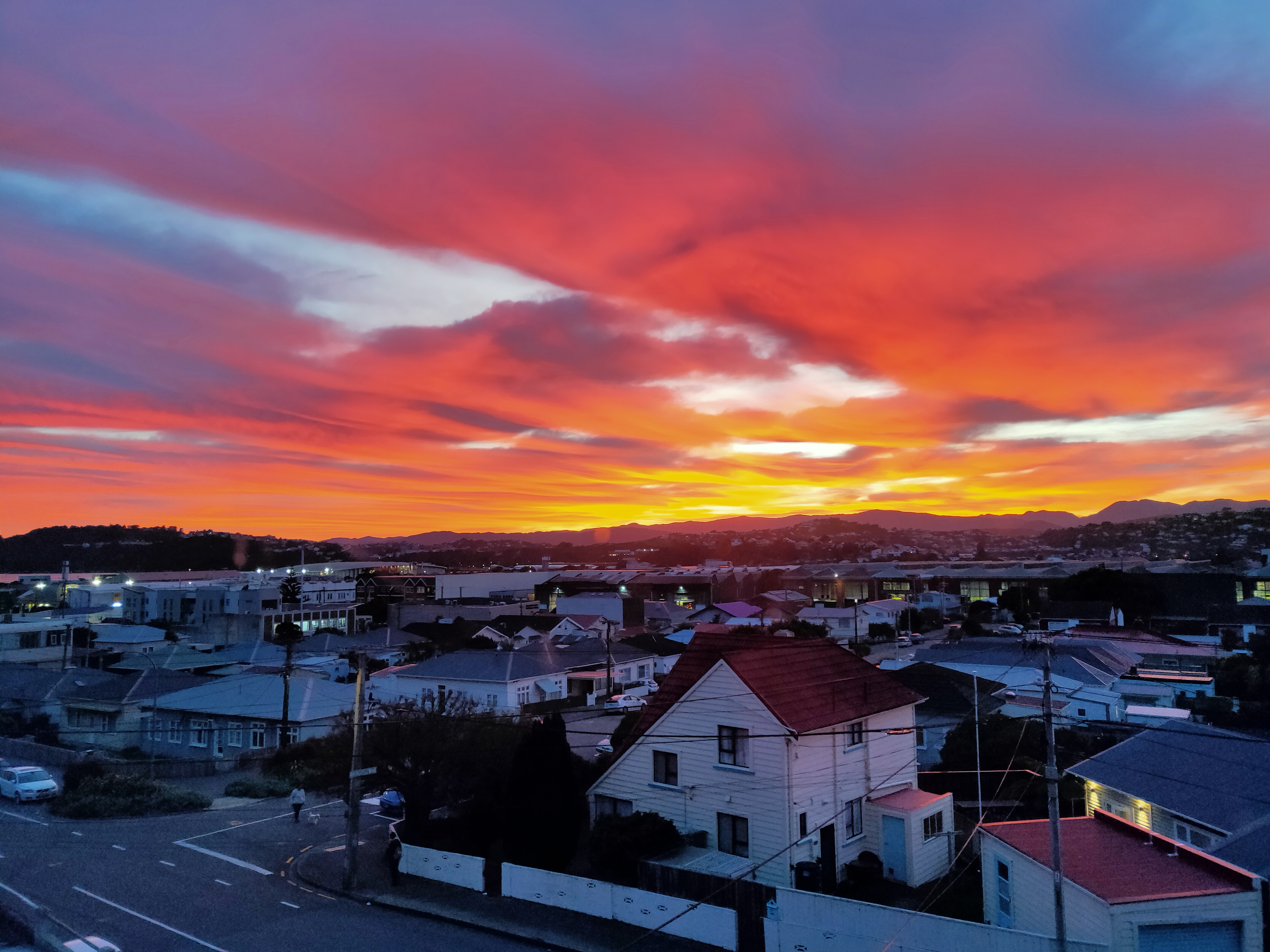
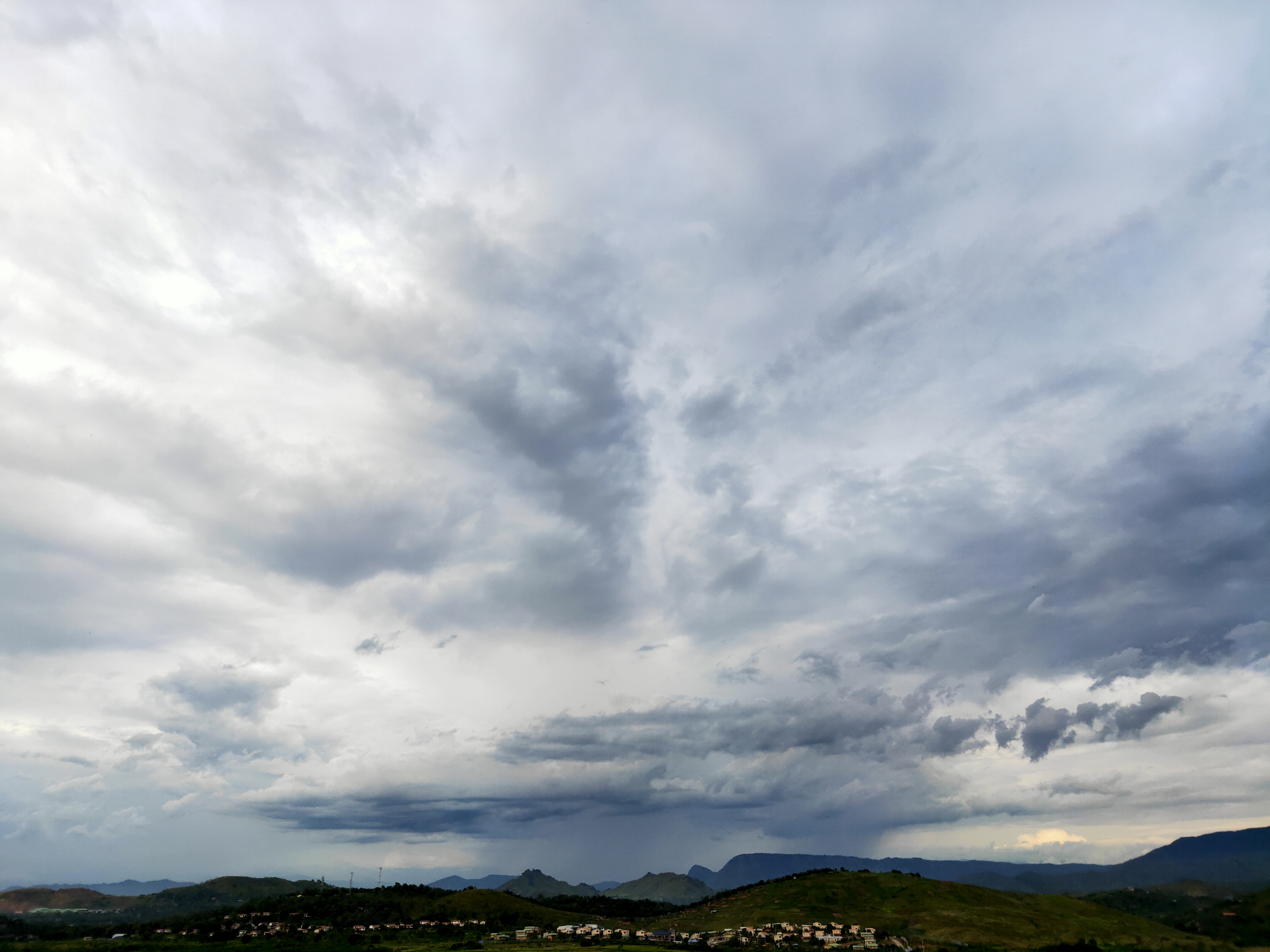
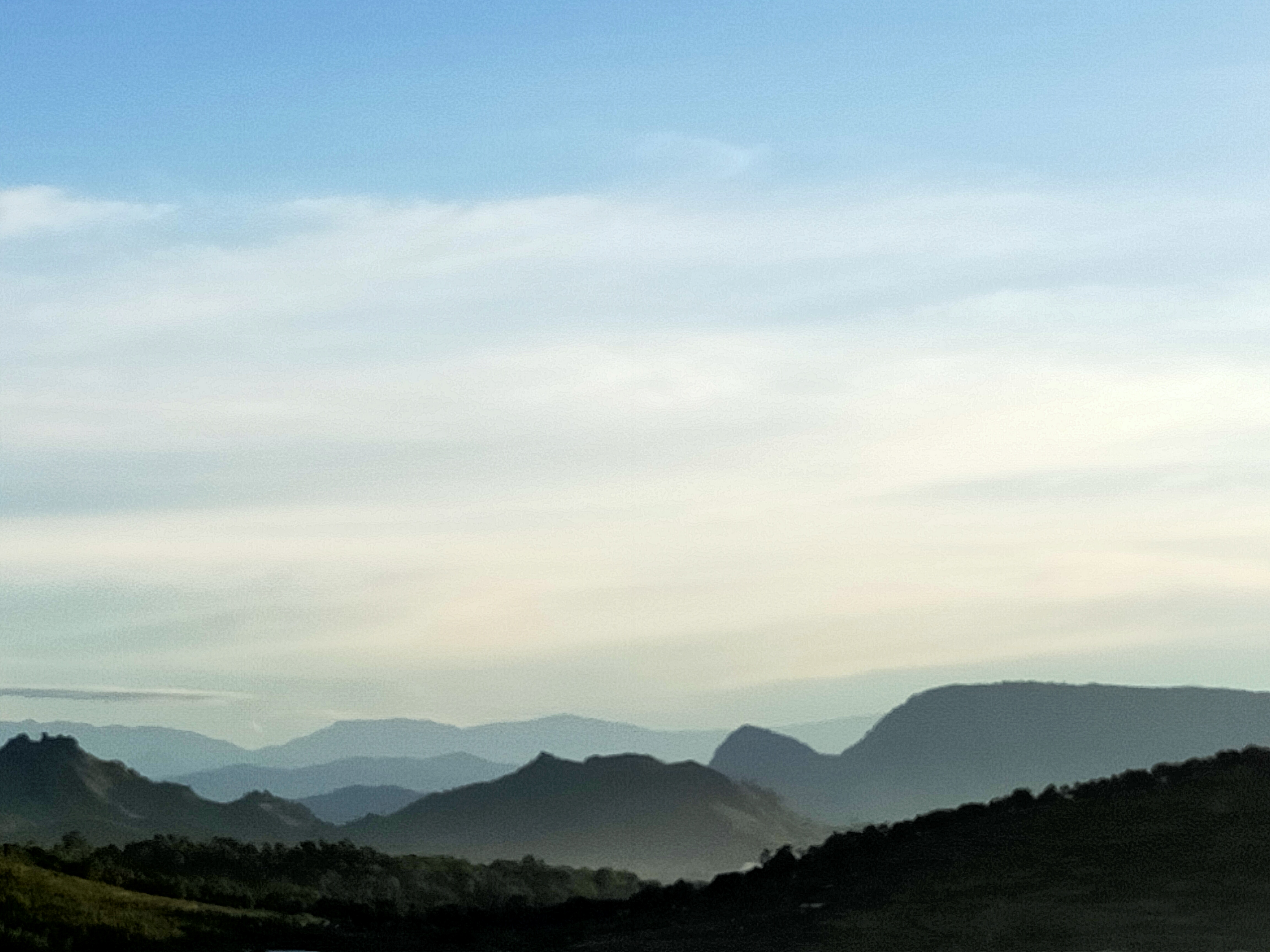
… clouds retreating east, pulled back like a curtain, letting in the winter sky; sunset to the west, smouldering behind the mountains. The wash of breaking waves in bits and pieces along the coast. The hopeful blink of a lighthouse as it waited for the stars…

…had to have been the most beautiful evening that Wellington ever stitched together.

July 8, 2009

Yeah, Yeah – We all know what you’re against, but what are you for?

Filed under: Ramblings and Musings — terence @ 8:02 pm
Tags:

As a younger man I was never short of a cause. All for this, all for that. Nowadays though, older and wearier, it’s harder to say just what it is I stand for. Hard, but not impossible. Whatever this is, I’m all for it!

July 5, 2009

(Wrong) Word!

Filed under: Ramblings and Musings — terence @ 10:01 am
Tags:

From the Guardian:

It probably seemed a good idea at the time. But Russia’s attempt to create a joint gas venture with Nigeria is set to become one of the classic branding disasters of all time ‑ after the new company was named Nigaz.

H/T Chris Blattman

Skating

Filed under: Ramblings and Musings — terence @ 9:26 am
Tags:

Halfway down I got the speed wobbles. Momentum and gravity too much for the cheap rubber bearings, the skateboard under my feet started whipping this way and that. Quickly, our trajectories became irreconcilable and the board shot off leaving me alone with the tarmac. For a few steps I ran, top-heavy and twisting, desperately trying to stay upright, then a foot clipped a leg and the inevitable took place. Down I went, smacking into the ground, rolling, thwap, thwap, thwap. I lay there for a while, black jeans torn, blood starting to seep from various grazes, before eventually picking myself up, shaky and aching.

I’d like to tell you that I found my board, pulled it out of the bushes, limped back up the road, turned around and conquered that damn hill. But I didn’t, I just hobbled off home. And that was pretty much the end of my skating days.

So I never became a skater but I’ve always been an avid spectator. Not just for the skill, but also for the way they turn the ugly, forgotten, functional parts of the city into sites of fun and grace.

July 1, 2009

Spray on Anesthetic

Filed under: Reactive Arthritis — terence @ 8:40 pm
Tags: ,

I don’t think spray on anesthetic ever really caught on. It must have seemed like a good idea – local anesthetic that could be applied without a needle. No need for all that nasty jabbing and piercing. It sure seemed good to me, back in 1999, when the rheumatologist at Charing Cross Hospital offered to use it when he drained the fluid off my softball sized knee. I’ve never got on with needles. It’s almost a phobia. As I waited for my appointment I’d been pacing round the waiting room trying to think brave thoughts, disturbing the old ladies queued up for their gold-shots. As it was, the draining of my knee already involved a big, thick needle through which the fluid was to be sucked out. So one less needle seemed like a great idea. “Sure, I’ll give it a go.”

And now I know why spray on anesthetic never caught on – it doesn’t work. It made my skin slightly numb but that was it. The fluid draining needle just laughed at that, cut like a dagger through my skin and gnawed on as many nerve endings as it could. I was in agony from the start. Things didn’t get better when the rheumatologist started squeezing my knee to get the fluid out.

“Ow. Ow. Ow!”
“How’s that anaesthetic working?”
“Not so goo-ooooouu-ooouuu-dddddd.”
“Nurse, I think you’re going to have to restrain the patient.”

The nurse, I can’t remember her name – although, oddly, I do remember she was from Winchester – pinned me back against the bed. The draining continued. I wasn’t particularly brave.

“Arrrrgggghhhh. Oh god stop. Stop please. The needle, it’s killing me! ARRGGHHH”

He didn’t stop. Although, sometime, maybe halfway through the process, he did look up and pause for a moment.

“Nurse,” his voice took on a thoughtful tone, “do you think we should close the door to the waiting room. Perhaps?”
Both the nurse and I turned to look. The door. We’d all forgotten. Wide open. The whole time. Conveying my screams.

Later, after it had all ended, I limped back out. The waiting room was still full. With little old ladies. Most looking quite a lot paler than they did when I went in.

June 30, 2009

Goldmine!

Filed under: Ramblings and Musings — terence @ 9:31 pm
Tags: , ,

Gold! – for anyone who ever tired of reading about the world but who doesn’t mind listening to other people talk.

Thanks to my IPOD and the LSE public lectures audio site, traffic jams will never be the same…

June 28, 2009

Santo Antao

Filed under: Going Places — terence @ 7:25 pm
Tags: , ,
Reeds Higher than we were

Reeds Higher than we were

Hazy in the morning heat Benji and I meandered along the riverside. Through bamboo-like reeds that grew higher than we were. Water gurgled and burped over the stones, in and out of pools. It wasn’t much of a river, a creek really, but it was the first flowing water we’d seen in months. After barren Sal and Sao Nicolau it might as well have been the banks of the Amazon.

Like the name suggests, the Cape Verde Islands were green once, covered in trees. That was the way the Portuguese found them. Uninhabited and verdant, oases off the edge of the Sahara amongst the thirsty Atlantic Sea. Ecosystems that had eked out an accommodation over millennia, trees feeding the rain that then fed the trees. The Portuguese put an end to this. Burnt the trees for farms and then watched in despair as the rain went too. Furthest west, Santo Antao remained the greenest. Fed by occasional showers, shrubs and bushes grew. They didn’t get far, but they sprung out of the soil in an intense purposeful green, shocking the brown around them. Villagers cultivated gardens, exporting fruit and vegetables to the rest of the archipelago. And the local divers grew pungent pot in the valleys somewhere, bobbing stoned in the trade-wind-swept sea.

The river led us past small villages of small stone houses. Past occasional smiles from doorways and the patter of life lived quietly. The islands had been a way-station during the height of the slave trade, and the villagers were a mix of Portuguese and African pasts. Their soft brown skin made them look more like Afro-Brazilians than West Africans.

Villages Santo Antao

Villages Santo Antao

Eventually, we reached the head of the valley, where the track left the water and started up the hillside. Puffing up the cobbled switchbacks we climbed into cooler, clearer air, stopping occasionally to take photos or catch our breaths. Two thirds of the way up we reached the clouds; small, grey tufts, they swept in groups off the sea and bunched against the hillside we climbed. We followed them up as they flowed over the ridge, eventually reaching the top of the track and the pass down into Cova. Cova (I’m sure I’m spelling it wrong) was the name we’d been given for the place at the track’s end. An ancient, extinct crater, a few hundred metres across. Its rim formed the head of the valley we’d climbed. Its centre was a flat field covered in grass. We wandered down into it.

The weather followed in its own strange way. Propelled by the wind the clouds kept climbing – up, maybe 100 metres above the ridge’s edge. There they were deserted, abandoned by the breeze. Heavy all of a sudden they fell, vertically towards the centre of the crater, dissolving as they reached the ground. We stood and marvelled, agreeing that though we’d both seen plenty of clouds in our days we’d never seen ones that flew straight down. We were still marvelling when we were disturbed from out reverie by clatter and laughter. Riding towards us were two kids on tiny, unshod and unsaddled donkeys. They had loamy brown skin and shiny white grins and were in complete control, directing the donkeys with switches of dried reed. Judging from their laughter and pointing we were obviously a splendid joke – two long haired surfers in rag-tag traveller’s clothes. No doubt every bit as strange to the kids of Cova as they were to us – children on donkeys, riding down with the falling clouds into a lost crater, beyond the track’s end on an almost forgotten, almost desert island.

On Donkeys

On Donkeys

June 24, 2009

Globalisation

Filed under: Going Places — terence @ 8:21 pm
Tags: ,

First time I got sick I stayed for a while with a friend in Bethnal Green. High up in a red-brick block of flats with black iron gates that separated the gentrified world within from the not so certain streets. I slept in the bed of a travelling South African. A window open for the summer heat let in sounds from the road below. One time, shouting woke me in the afternoon. Outside, a bunch of kids with pasty skin and shaven heads were trying to mug a Pakistani pizza delivery guy. He twirled a tiny length of chain as if it might fend them off, before thinking better of it and dashing for his scooter. Speeding away as one of the kids booted the back of the bike.

One night as I lay in bed unable to sleep I heard the smash of glass. Then the thump of car panelling being kicked. I lay flat on my back, curious but too sore to move. Wrench – a windscreen wiper bent or broken. Smash. Crack. One after another cars being vandalised. The trail of destruction moved under the window.

“Wait don’t ‘it that one,” a slurring drunken voice, an East End accent, “…it’s English.”

“Yeah.”

The owner of a Jag or a Rover got lucky and the vandals kept on down the street, breaking things, uglier than before, comforted by a lie.

…mainly built by foreign companies – Jaguar and Land Rover are owned by Tata Motors of India, BMW owns Mini and Rolls-Royce, Volkswagen owns Bentley, while the MG is owned by Nanjing Automobile Group of China…

Someone should have told them. But someone stayed quiet, staring up at the roof, a wandering New Zealander, immobilised by a disease he caught in Africa, listening to angry oafish East Enders kicking in their neighbours’ cars.

June 20, 2009

State of Play – a very, very short review

Filed under: Ramblings and Musings — terence @ 8:54 pm
Tags:

Plot twist? Plot dislocation would be my diagnosis. A painful waste of $16.

Four Things From Four Days in Samoa

Filed under: Going Places — terence @ 8:40 am

Four things from four days spent in Samoa:

1. Language: sliding down l’s, hopping apostrophes and circling o’s, Samoan is a surprisingly beautiful language.

2. The Pacific: dotted with forlorn clouds looking for misplaced islands; cut by the splash of white on the reef’s edge; and patiently travelling, blown along by the trades – I could have stared at the Pacific for days.

3. Colour! Painted on the buses and shacks, and bursting from gardens. Colour, colour, colour.

4. The tropics: dilapidated roadside stores covered in posters for soap powder, the  smell of burning, the unhealthy dogs and hungry looking cats. Wherever you go, the tropics have more in common than the weather.

June 19, 2009

Wheels!

Filed under: Ramblings and Musings — terence @ 6:00 pm

I’m not much of a cyclist. There was the frame snapping crash in Richmond Park. The surfboard fin through the spokes in Eastbourne. The time my sister (who is a good cyclist) took me mountain biking – exhausted uphill and terrified downhill I walked most of the way. Then there was the time a friend took me mountain biking along a hillside walking track. I stopped to let some hikers past, got my foot tangled in the pedal while trying to start up again, and keeled over the edge of the track and down a bank, bike on top of me. Only my pride was hurt, but that was sufficient.

Anyhow, I tell you all this because maybe, just maybe, my ineptitude on a bicycle explains why this you tube video is so darn amazing to me. Maybe. But I doubt it.

June 13, 2009

Terminator Salvation – a review

Filed under: Ramblings and Musings — terence @ 7:37 am
Tags: ,

200px-Terminator-salvation-posterIt’s 2018 and LA has been laid waste. Buildings crumble and collapse. The roads are potholed and there’s garbage everywhere. Clearly that whole thing with the referendum and the un-repealable tax cuts has gone way too far. Arnie is nowhere to be seen.

There’s a war going on too, between man and machine. From the first early skirmishes with the Microsoft Office Assistant to the fuck-off robots now marauding the streets, it’s gone badly for humanity. By 2018 only the hunkiest and hottest people are left alive. And they’ve been reduced to wearing ragged, revealing clothes and speaking solely in clichés. There’s hope, though, because the robots’ latest weapon is a creature – a half robot half human – and maybe, just maybe, its human side will win out.

I was 10 years old when Terminator was made. I suspect I was a few years older still when I was finally able to watch it on video at a friend’s place. With its buckling switchblades and “fuck you arsehole”s, it was total teenage cool. Hardly a masterpiece but it almost had a story and a dark edgy world as well. I was old enough, by the time Terminator 2 came out, to cringe quite a lot. But the leaping trucks and Guns’n’Roses made up for the Hollywood dopiness. Or, actually, they were part of it. But they were good dope.

As far as good dopiness goes, Terminator 4 (I completely missed Terminator 3; was unaware it even existed), has a bit. Mighty leaps, shuddering explosions and helicopter crashes that will have you ducking. They’ve all the imagination of a cut and paste from an explosions manual. But you’re still going to want to cling to that dope, because it’s the only thing that will get you through the movie. Over the continent sized holes in the plot. Past the sheer corniness of almost every word that is spoken. Beyond the most implausibly easy open-heart transplant ever performed. And to the last line, which is essentially an advert for the next sequel. (This in itself is scarier than any of the cyborgs).

None of this is news of course. And I suppose anyone who goes to see the third sequel to any movie deserves what they get. But how hard would it be, with all that money, and all the ideas out there, to make something that was still silly but at least resembled a story more than it does a spreadsheet formula:

=BOOM(8*STUDMUFN–(PLOT/1000)*SUM(CLICHÉ)+POPCORN+SQL) = $200,000,000

If this is entertainment then the robots have already won.

June 11, 2009

Starlings

Filed under: Ramblings and Musings, Staying Places — terence @ 9:15 pm
Tags: ,

Starlings roost in the middle of Wellington, near my wife’s work. Depending on the hour, when I’m waiting to pick her up, I sit in the car park and listen as they settle in the billowing trees. Hundreds of them, dowsing the car sounds in bird song. Chattering, chattering, chattering like crazy to each other. I don’t know, maybe they’re gossiping, or telling the stories of their day, or spinning delighted tales about the glory of flight. Or maybe they just chirp because that’s what birds do. But that conversation, taking place on a thousand branches, over the tops of the lonely commuters, as the street lights replace the sun, is the most reassuring thing. A secret, happy urban joy.

June 7, 2009

The Positionality Meme

Filed under: Ramblings and Musings — terence @ 9:09 am
Tags:

Quite possibly the smallest meme on the entire Internet. Simon started it, Harvest Bird picked it up, and I can’t resist. (The other two didn’t actually call it a meme, but when a third person picks it up that’s surely what it becomes.)

Anyhow, the rough idea is to write down your positionality in 10 points or less.  Positionality being something like the intellectual baggage you bring into research. You’re not actually writing chapter two of your masters thesis but rather a blog post, so personal rambling is encouraged, detailed digressions into Foucault, not so much.

1. …honestly though, while I’m open to thinking about knowledge production and belief in in a way that endogenises these things into a broader set of structures of power, I think the doing so is more useful as a tool for augmenting other ways of thinking rather than a helpful starting point in itself. And that post-structuralists take it all way too far, often using it as an excuse to cover their own woolly thinking. Anyhow, look what it does to your prose.

2. That leave’s me a analytical-liberal of sorts. The frame for my thinking is rationality and the starting point is the choices of individuals set amongst the world they live, bearing in mind this needs to be augmented by an understanding of the messy fuzziness of human existence.

3. I think Utilitarianism is the least worst political philosophy, and so the purpose of politics and development should be to maximise well-being.

4. I’m a left-liberal insomuch as that I think that some collective action is required to achieve (3). But that there are limits to what collective action can achieve and risks associated with it.

5. Or, to put it all another way, if you were to ask me what utopia would look like, it would be a radically different place from the one we inhabit. But – like Simon – I’m conservative in a way: cautious (or pessimistic) about what humans can really achieve.

6. I’m white, male and from a well-off family. Perhaps this explains 1-5 above?

7. I was raised by agnostics. My closest religious relative was my Anglican Minister maternal grandfather. So, other than a couple of years at an Anglican intermediate school, my upbringing was remarkably free of religion. This hasn’t stopped me wondering, wondering and wondering about religion. The end result: I’m an agnostic, like my parents.

And yet, exposed to the sublime in nature I can definitely lapse into a kind of ’surely there must be a point to this all’ Pantheism. And I have an odd sneaking sympathy for Anglicanism. Oh, and I really enjoy listening to Hymns on Sunday on National Radio.

8. I’m a quicker thinker than learner, and my relative strength is synthesising – pulling ideas and theories from information. I’m not as good with details. And, like Harvest Bird, I pick things up much quicker if they connect to things I already know or debates I’m already having.

9. I can write pretty well but always wish I did it better.

10. I am plagued by rogue commas, typos and poor spelling.

June 4, 2009

Wellington!

Filed under: Ramblings and Musings, Staying Places — terence @ 8:15 pm

I know, I know, I’m always saying this, but wasn’t this morning – with it’s ice covered windscreens, mist clogged valleys, and faint-hopeful sun – quite possibly the prettiest morning in the history of Wellington?

June 3, 2009

The Freedom Paradox by Clive Hamilton – a short review

Filed under: Ramblings and Musings — terence @ 8:18 pm
Tags: , ,

The argument runs something like this:

From Milton Friedman’s Free to Choose to Australia’s Work Choices Legislation, much of moderfreedom-paradoxn politics and economics is sold to us in the name of choice. After all, what can be better than letting people choose for themselves? If they’re rational and operating within rules of a game that’s fair, even if they choose in their own self interest, their decisions will still be for the common good.

And yet, choice really isn’t that simple. Often our choices are constrained by interactions with the choices of others. Other times we’re forced to choose without complete information. Sometimes – as Kant pointed out – sating our short term desires may not be in our long term interest. And yet we still give in to our desires. Sometimes we’re just plain irrational. Nowadays marketing is all around us, coaxing us, working on our sub-conscious. Choice is not all it seems.

Reason is not all it seems either; true it can help us unravel the deceptions of supposed free choice, but it what it can’t do is provide us with a compelling case for altruism or a basis for a truly moral code of ethics. Recourse to reason and rationality is where Kant went wrong. Instead we should merely borrow from Kant when he talked about the phenomenon and noumenon – the world as we encounter it and the world as it really is – and follow Schopenhaur in rejecting reason and waving our hands quite a lot and appealing to something else. Namely – wave wave – our sense of the noumenon. Our sense of what is true to the real nature  of existence. How do I know this? Well I just do. And you just should just to. And how should you know what the real nature of existence requires of you? Well I can’t really explain that because explanations tend to hinge on reason and I’ve already eschewed that. You could try Eastern thought. Moving along, let me offer a few digressions about sex, suicide and nature.

Do I sound exasperated? I hate writing negative reviews. Especially as Clive Hamilton is an interesting thinker and has written some good  stuff. But this book frustrated me. Not because I disagreed with it: actually I’m pretty much in accordance with everything up to the discarding of reason. And even then, I’m open to the idea. I see reason’s limits. It’s just that, to me, Hamilton’s attempt to move beyond reason is under-argued; it doesn’t convince at all. To be fair to Hamilton that may well be because making that case for post-rational ethics is incredibly hard, while still being necessary. But even allowing for this, the book is too loose. More time should have been spent on the tricky stuff and much less time on the diversions (and while we’re at it much better evidence could have been mustered on the deceptive nature of ‘choice’ – see Tom Slee’s “No One makes you shop at Wall Mart”, for example).

The Freedom Paradox probably won’t put me off trying Hamilton’s next offer. He certainly seems to be asking the right questions. It’s just a pity that in this book he doesn’t get very far towards answering them.

[In the interests of fairness, here's a much kinder review, from someone much better qualified than me to comment.]

The 80s reconsidered

Filed under: Ramblings and Musings — terence @ 8:14 pm
Tags:

Perfect

Hat Tip and thank you Dimpost.

June 1, 2009

A Holiday to Remember

Filed under: Going Places, Ramblings and Musings — terence @ 10:55 am
Tags: , ,

an old blog post reworked…

I’ve been in a bar fight in Bali. I remember it well. We’d been drinking arak from jam jars in a pub shaped like a pirate ship. Steve and I had almost two excuses for this. The first was the six weeks we’d spent in a tiny Catholic village on an island in the Timor Sea. Surfing all day, going to bed at dusk and waking with the roosters before dawn. We’d earned it. The second excuse was Trish, a friend of Steve’s from Wellington, in Bali on her way home from Europe. Part Malaysian, with gentle brown skin and a body that ebbed and curved pleasantly, like waves on a good day. She was keen to party too.

Steve had wandered off and Trish and I were dancing. Silly dancing to be exact – exaggerated motions, extravagant moves. To be honest, it’s the only way I can dance: I grew up in Lower Hutt. I’m sure Trish could dance properly but she was indulging me. With our spirals and twirls we cleared ourselves a corner of the dance floor. Except for a local guy with blow-dried hair that swum over his shoulders and muscles that tugged at his just-too-tight shirt. Slowly, he triangulated the dance floor so it was him dancing with Trish, not me.

It was ok for a while, all part of the joke. Trish rolled her eyes. Eventually though, it needed to stop. Trish wasn’t interested and I was going to run out of dance floor if he kept it up. And so, following the advice of the Lonely Planet, I told him we were married: “Sorry mate – kita karwin”

If he understood my slurred Indonesian he didn’t listen. Trish tried next. She spoke Indonesian better than me. Unfortunately, she hadn’t read the guidebook: “Not interested friend. I like girls and he likes boys.”

That was a mistake. Not because he actually believed her. But more because it showed he wasn’t being taken seriously. He puffed up, turned away from Trish and – whap! – punched me in the throat. I can still remember my shock, my rising adrenaline, the gasp as my airway closed for a moment.

It wasn’t much of a fight. Like I said, I grew up in Lower Hutt – I know a thing or two about fights. In
particular, how to avoid them. I started talking, mollifying. Trish did the same, Steve turned up and things were eventually smoothed over.

And that’s the end of the story.

Funny thing is there’s another tale from that night. One I heard Steve tell years later at a barbeque in Manly. Almost every detail was the same, except in his retelling, Steve was the guy getting punched. I didn’t say anything; I didn’t know what to say. But I’ve wondered about it ever since.

Steve must have believed what he was saying was true. Why make something up in front of someone who was there. He even started the story by turning to me and saying, “remember that time in Bali?”

So I have a theory. Stories are currency on the road, exchanged to ease boredom while waiting for planes, shared on overnight buses, told to gob-smacked strangers around campfires. And, as far as surfers’ tales go, that bar fight’s ok. At least if you’re the guy who got hit. But if you weren’t, you hardly have a story. So I figure Steve must have begun retelling the story, with him on the receiving end. A small lie, all fair when you’re spinning a yarn. But told and re-told, stories take on a life of their own. And this one, I suspect, eventually ejected his real memories from the nest. By the time we were both sitting at that barbeque,

Steve was telling the truth as he remembered it.

Of course, there’s a competing theory. As you may have noticed I like story telling too. And, lord knows, there have been enough overnight buses and delayed planes in my life. So, it’s possible that I’m the culprit, maybe. But I don’t know. That punch, that choke, that shock, they all still feel awfully real.

May 31, 2009

Economists Making Sense

Filed under: Ramblings and Musings — terence @ 9:31 pm
Tags: ,

“The enemy of the conventional wisdom is not ideas but the march of events.” – John Kenneth Galbraith in the Affluent Society.

Human Rights

Filed under: Ramblings and Musings — terence @ 10:13 am

A few weeks ago I spoke on a panel up at university. The subject was whether universal human rights exist. These are my, slightly edited, speech notes.

The question that has been asked of us this evening is: are there universal human rights? Rights which we are all entitled to, regardless of where we live, regardless of whose borders we find ourselves within, regardless of our gender, race, abilities and age?

I have a short answer to these questions and that is simply: “Yes – Of course.”

I also have 10 minutes of space allocated to my talk. So I had better give you the slightly longer answer as well.

Click here to read the rest

May 29, 2009

The Three M’s – Methotrexate, Melbourne and Me

Filed under: Reactive Arthritis — terence @ 8:44 am

So, finally, I’ve started taking Methotrexate. This is the immunosuppresant commonly used to treat Reative Arthritis when it gets severe. I’ve held off taking it for so long. Why? Partially, because when it was first suggested to me in 2003 it was unclear I actually needed it. Partially, because I’ve been afraid of its potential side effects. Partially, because I’ve thought of it as a way of dampening symptoms rather than a cure (and I’ve always hoped for a cure). And partially, because, while the few people I’ve known on Methotrexate have benefitted from it, they’ve never done that well.

Was I right to do this? If you’d asked me that two years ago, essentially in remission and unaware of my heart problems, I would have said ‘yes’…but now…immobilised and unable to risk more damage to my aorta, the answer is completely different. So I’ve started taking it.

Last week I also returned to Melbourne to see the doctor and naturopath there. I figured they’d hate Methotrexate but they didn’t, so I’m continuing with the diet and anti-biotics as well.

More important than all that, maybe, was South Melbourne itself. Nestled against Port Phillip Bay. Two blocks back the Nappean highway chugs its way alongside cracked footpaths and carbon stained buildings. Supermarkets, delis, and chemists stand next to each other, wearing uncomfortable shapes. People shuffle around, worn,  or harried, or overweight, in in mismatched clothes. Depressing. And yet, on the morning of my appointment I wandered down to the beach. The sand is golden and mist is lifting off the sea. It’s glassy calm and the water sits quiet and clear over the sandbars. To the north and across the bay fog swallows the distance. The sun is warming the world and in South Melbourne ugly and serene seem to get on surprisingly well…

May 24, 2009

On Arrival

Filed under: Going Places — terence @ 7:32 pm
Tags: ,

…another writing course exercise

iceberg greenlandLike ghosts in a dream, icebergs appear in the mist below. Until then I’d been my own gritty fog. Three hours sleep in a Reykjavík dorm, the ache of an ended relationship. The torments I always have at the start of a trip: you’re unprepared, you’re over spent, why are you here? It vanishes with the icebergs. I see one and then realise that, like the night’s first star, it’s surrounded. Two. Three. Four. Hundreds! I press my nose to the small oblong window. I want to sing or at least shout “icebergs” to everyone on the plane. I keep it to myself but I’m bubbling like freshly opened soda. The sea below us is glassy-still, pale-blue and woven with filaments of cold, white cloud.

The icebergs gather, beautiful, but more important still, road markers: the point where Greenland stops being an idea in a book I’d read somewhere and starts to become a place where I’m actually going to stand.

The continent follows. We circle a giant Fjord and land next to a village of scattered, hopeful, red and blue houses. We stand on the airstrip, boots crunching on the gravel, breaths puffing in front of us. The view is giant-sized. Mountains, cut steep out of granite, tower and fall from the icecap. In the valleys glaciers, spines of splintered ice, inch to the sea.

Propellers stopped, it’s quiet. The sort of swallowing silence that turns shouts into whispers. Out front, the icebergs saunter, glowing like shattered stars. Water sculptured by water – curves and swoops, steeples and arches, coils and lenses of blue in white.

Next to me, two pretty Spanish day-trippers, wrapped in scarves and stylish coats, babble – every bit as excited as I am. “Est magico, est magico,” one of them keeps saying.

I have three weeks in Greenland, under the northern lights, north of the Arctic Circle. And then, after that, the frustration of never quite finding words to do justice to it all. In the end I will give up and just borrow from the Spanish lady. I tell you: Greenland is magic or, at least, as close to it as I have ever been.

May 19, 2009

Monument

Filed under: Going Places — terence @ 8:00 pm
Tags: ,

a writing course exercise…

In 1666 a bakery blaze became a firestorm that swept across London. It destroyed Saint Paul’s Cathedral, razed the homes of bankers, and burnt the slums of the poor. The army fought it by blowing up buildings and pulling down houses with grappling hooks. It sparked a refugee crisis and led to the lynching of unfortunate French and Dutch. On the continent it was claimed as divine retribution. It may have put paid to the plague.

I knew none of this when I got off at the wrong Underground station in 1996 and, acting on a whim, decided to go for a walk.

It was autumn and the sky was held together by concrete coloured clouds. Stranded by changing seasons and changing travel plans, I was wearing borrowed clothes, cold in the wind, and struggling, without really knowing, to come to grips with the city I’d found myself in. Everything cost so much. The footpaths were packed, and walking meant weave and bluff, weave and bluff. It wasn’t Wellington, and it was stranger than Kuala Lumpur and Medan because it wasn’t meant to be. It was flat and formless, and run through with congested streets. It never seemed to end.

I was walking with my head down, thinking about places I’d rather be, when the street I was on spilled into a square. A stone column stood in its centre. It was carved and ornate with fluted sides and capped with a golden crown. It struck up at the sky and stuck out from the buildings around it. I guessed it had to be old. I walked over. A plaque at its base explained.

A monument to the great fire of London, built between 1671 and 1677. 202 feet high and 202 feet from where the fire first caught. Designed by Christopher Wren, the architect who remodelled London in the wake of the blaze.

For half an hour I forgot about being cold and lost, and marvelled at the history in front of me, wandering off eventually. I didn’t even think it might be possible to climb the tower as well as read about it.

That discovery was M.’s, made the following spring. We met in the travellers’ house where I lived. She was black haired and pretty, and joked she was the palest Californian I was ever going to meet. We liked the same music and worried about the same things. We wandered around London together. I took her to the Monument wanting to show off this thing I’d found.

She discovered the entrance and we deposited our two pound coins, climbing the spiralling stairs, hands trailing on the hand-worn rail. At the top, we stood together on the almost empty viewing platform.

We were looking out at London from a tower that was built just after Abel Tasman set sight on New Zealand and before the first Spanish settlers reached LA. We were looking out at a city that was at least as old as the Romans, which had been captured by Vikings, and which became the heart of an empire. Above us, blue and grey shared the sky. And out front the metropolis sprawled off, held up by cranes. The Thames curved in and out, dodging buildings and ducking bridges. High rises, churches’ steeples and motorways jostled for space. And the suburbs shrank away.

What way do you think we’re looking?
I don’t know. I wonder, are those hills or clouds?
I think the buildings stop eventually.

-~-

That day has its share of stories. How close we stood; what we did, and what we didn’t do. The one that remains most tangible now is less complicated though. Simply, the way the city – stacked up on all that history, and laid out in front of us like a map – became more manageable as we stood there together, eyes straining, wondering if we could see to its limits.

monument tower panorama cam

From the Monument Tower Webcam at Sunset

May 17, 2009

Wandering Blog Goodies

Filed under: Ramblings and Musings, Reactive Arthritis — terence @ 9:29 am
Tags: , ,

The Italians are coming! (Owen Barder in Ethiopia)

John Quiggin excerpts Akerlof and Shiller on neo-classical economics’ starting points and the weaknesses that come with this:

The economics of the textbooks seeks to minimise as much as possible departures from pure economic motivation and from rationality. There is a good reason for doing so – and each of us has spent a good portion of his life writing in this tradition. The economics of Adam Smith is well understood. Explanations in terms of small deviations from Smith’s ideal system are thus clear, because they are posed within a framework that is already very well understood. But that does not mean that these small deviations from Smith’s system describe how the economy actually works
Our book marks a break with this tradition. In our view, economic theory should be derived not from the minimal deviations from the system of Adam Smith [needed to provide a plausible account of observed outcomes - JQ] but rather from the deviations that actually do occur and can be observed.

And Ben Goldacre has a column that shows just how economic power can skew scientific method. And which should scare you even if you’re not arthritic.

In Australia a fascinating court case has been playing out around some people who had heart attacks after taking the Merck drug Vioxx. … The first fun thing to come out in the Australian one is email documentation showing that staff at Merck made a “hit list” of doctors who were critical of the company, or of the drug. This list had words like “neutralise”, “neutralised” and “discredit” next to the names of various doctors. “We may need to seek them out and destroy them where they live,” said one email, from a Merck employee. Gosh okay, see you at mine later…
.They’re also alleged to have used other tactics, like trying to interfere with academic appointments, and dropping hints about how funding to institutions might dry up. Institutions might think about whether they, in turn, wish to receive money from a company like that.

But bigger, and better, is the publication Merck paid academic journal publisher Elsevier to produce…But this time Elsevier Australia went the whole hog: they gave Merck an entire publication to themselves, which looked like an academic journal, but in fact only contained reprinted articles, or summaries of other articles. In issue 2, for example, 9 of the 29 articles were about Vioxx, and 12 of the remaining were about another Merck drug, Fosamax. All of these articles presented positive conclusions, and some were bizarre: like a review article containing just 2 references.

In a statement to The Scientist magazine, Elsevier initially said that the company “does not today consider a compilation of reprinted articles a ‘Journal’”. I would like to expand on this statement. It was a collection of academic journal articles, published by the academic journal publisher Elsevier, in an academic journal shaped package. Perhaps if it wasn’t an academic journal they could have made this clearer in the title which, I should have mentioned, was: The Australasian Journal of Bone and Joint Medicine.

May 14, 2009

Rain

Filed under: Going Places — terence @ 7:18 pm
Tags: , , ,

We were sitting in the bank, waiting to cash our travellers cheques when it started to rain. The clouds had been gathering for days, thick and grey, lowering the sky, but we hadn’t thought about rain. In Nusa Tengara the weather had been fine, blue skies and trade winds, for half a year at least.

In a few minutes this all changed. Rumbling thunder, then watery splats as, one after another, the first swollen drops fell onto the road. For a moment the rain was spaced out, falling here and there, but then the cloud truly burst, and it pelted down.

Rain

Pissing down

Good thing we’re inside aye

We hadn’t thought about rain, but everyone else was waiting for it. The water filled the streets with children.  Running out of houses and buildings, laughing and clapping, shouting and dancing. An impromptu football match kicked off. Teenage men skidding across the tarmac, chasing a semi-deflated ball as it splashed between the puddles. Some of the younger kids simply stood, their hands held up, catching raindrops, smiling at the sky. Adults gathered in the eves of buildings, shouting greetings and jokes out across the weather.

I shared a bemo with a Dutch guy once, who told me that the end of the dry season was a time of hunger in South East Indonesia, and that the rain meant the end of this. But these people were celebrating, living in the town where I’m guessing food didn’t run out. Maybe it was still habit, or maybe times really were rough, or maybe they were just glad for the change.

It only lasted fifteen minutes then petered out. At its end we wandered into the street, amongst the running children, talkative adults and the steamy, sated smell of the Earth replenished with water.

May 11, 2009

Not Unreasonable

Filed under: Ramblings and Musings — terence @ 8:39 pm
Tags:

Reason has its limits. It’s hard, for example, to make a reasoned case for anything more than enlightened self interest. It’s equally hard I should add, lest any libertarians in the audience be tempted to pull out stumps and declare victory after only a sentence, to make a reasoned case for unmitigated selfishness. Either way, in political philosophy, reason can only take you so far in answering the whys before it starts to run out of steam.

“We should provide everyone with accessible health care.”
“Why?”
“Because health is an integral component to peoples’ wellbeing.”
“And?”
“And society should be structured to maximise the well being of its members.”
“Why?”
“…”

With time and patience you can get a bit further but eventually, it seems to me at least, you end up mired in the sands of arguments where reason has little traction. Propelled by reason you can get close to being able to anchor political philosophy in the stuff of the universe but never quite there. Eventually some leap of faith is required.

Similarly, some of the things we value most in life don’t appear to stem from reason at all – love, ascetics, altruism, bravery, tenacity, hope…

Which begs the question, perhaps there’s an alternative to reason? A fairly popular one in the circles I knock about in is spirituality – guidance from belief in something supernatural. We don’t have to reason our morals – we can take them from the bible, or the inspired teachings of a Buddha, or straight out of the universe itself. I can see the temptation; faith has been a motivating factor behind many of the acts of kindness that have interrupted the generally sad sweep of history. And, if, as I said above, leaps of faith are required in all political philosophies why not use faith to make them?

The trouble is, arguments of faith and spirituality lack one critical component that reason does have – a common language for mediating differences. If your god told you to set society up in a particular way, while mine told me to do so in a different manner altogether, we have no way of mediating our differences. Seeing as they are both divinely revealed, true on their own terms and right, we have no potential for navigating between the two.

Consider the statements: “Sex outside marriage is bad because god says so” and “Sex outside marriage is bad because it leaves people unhappy.” The first leaves no space for further conversation (god said it – so there!); the second offers the opportunity for logical testing using evidence. It could well be challenged, proven wrong and discarded by reasonable people.

Saying all this isn’t to deny people their personal beliefs: I appreciate the role spirituality has in the lives of many, it’s just to point out that in public policy – the realm where we negotiate our collective decisions about our actions that impact on us together – we need to be able to test competing propositions using a common framework. And for this there’s no real substitute for reason, despite all its flaws.

May 9, 2009

Storm Surge!

Filed under: Going Places, Staying Places — terence @ 8:14 am
Tags: , , ,

When I drove to work on Wednesday morning the hail was piled up like snow in the streets of Berhampore. An hour earlier, maybe  a little more, the Thunder woke me, and I lay in bed listening to it boom, counting the seconds between the lightening flash and following sound.

I can barely remember the last time I heard a storm like that in Wellington. In Sydney they used to roll across the city regularly – I can remember watching from the KPMG building where I worked above Darling Harbour as white-purple bolts crashed into the Western Suburbs. I can remember racing to cover the windscreen of our flatmate’s car so it didn’t shatter under the marble size hailstones belting out of the sky. I can remember sitting on the beach on dusk, in a warm calm world again, watching the passing squall, fading out to sea, electric light on the horizon.

From summers in Long Island I remember storms on humid nights. One which passed directly overhead, lightening striking a power pole at the end of the street where my then girlfriend lived. We road over from my place to find the fire brigade dowsing the surrounding trees and the power pole splintered and smoldering on the ground.  We rode on to her place to find the television ruined. Despite the fact it was off, and turned off at the wall. It had been plugged into a multi-point surge protector too – all that was left of that was a melted lump of plastic.

Anyhow, while I was lying in bed on Wednesday morning, listening to hail and thinking of storms in other countries, someone was up videoing. You can watch the Wellington storm on YouTube. And read about it on the MetService blog.

May 8, 2009

Flute-boxing

Filed under: Ramblings and Musings — terence @ 9:39 pm
Tags:

Huh? Wha? This is pretty cool, I think…

May 4, 2009

Maybe I should of used a dictionary afterall

Filed under: Going Places, Ramblings and Musings — terence @ 8:19 pm
Tags:

Hah. Under my post on corruption, Harvest Bird offers an even better tale of the perils hidden between the words of other people’s languages.

Which reminds me:

One winter in Madeira I met Tony, an artist and surfer from Wales. Like me he was trying learning Portuguese. Unlike me he eventually got there. In the meantime though, one afternoon he went up to a local joiner to buy some wood for picture frames. When the time came to talk prices, tired of the same old “quanto coosta” he decided to try something new – an attempt at, “how much do you charge?”

Or, as he put it that afternoon, “Quanto caga?”

Alas for Tony, if you want to say “how much do you charge?” in Portuguese. You’d say (sorry about my spelling): “Quanto cobra?” Or something like that.

“Quanto caga?” on the other hand, means – once you allow for bad grammar – something along the lines of: “how much do you shit?”

Tony never told me the joiner’s reply…

Breath

Filed under: Ramblings and Musings, Surfing — terence @ 7:51 pm
Tags: ,

The really short review: if you read only one surfing novel in your life, read Breath by Tim Winton.

My attempt at a longer review, complete with another one of my surfing tales (any excuse!), is up at the Scoop Review of Books.

Review now over the fold too.

Click here to read more…

May 3, 2009

Corruption!

Filed under: Going Places — terence @ 8:58 pm
Tags: , ,

I work in international development. Corruption is something development types take seriously – it gets in the way of markets and stops governments from doing good things like providing health care or building schools.  In general, it’s a bad thing. So bad in fact that, as an idealistic younger man, I travelled to Brazil to study something called the Orcamento Participativo, a system of municipal governance which, among other successes to its name, was credited with reducing corruption in the cities where it ran.

Unlike corruption, tipping, on the other hand, isn’t something development types think so much about. It doesn’t lead to war, or stagnation, or disease. It’s not without its challenges though. Especially as no two countries have exactly the same approach to it. In New Zealand you don’t have to tip at restaurants and you’d be thought of as positively odd if you tried to tip anywhere else. In New York, on the other hand, not only do you need to tip restaurant staff even if the service is poor, but you also need to tip bar tenders and hairdressers. In other countries like England and Spain the norms are different again.

Having muddled my way around the globe’s tipping norms, by the time I got to Brazil for my masters research I figured I’d stop guessing and simply ask. Sure, there was the risk that the porter, or waiter or whoever, might say yes even when a tip wasn’t necessary but I figured they were poorly paid service workers in a third world country. If I ended up giving them a few extra dollars when it wasn’t really necessary, what was the harm.

The only real problem I had was that I didn’t actually know the Portuguese word for ‘tip’. Not such a big problem though, I decided I’d just use the Spanish word – propina – instead. Often-enough Spanish and Portuguese words are interchangeable. And in the South of Brazil, where I was, the local vernacular had a stronger than usual Spanish influence.

And so it was that I spent my first few days dealing with my tip uncertainty in a straight-up manner. I asked the nice old guy who carried my bags at the hotel if it was “normal dar uma propina” for his services. He looked at me a little funny – probably struggling with my accent or grammar – but took the change I gave him. The same thing happened with the waitress at the vegetarian restaurant, the guy at the café and the woman at the hairdressers. (Although, she started with a puzzled ‘no’ before changing her answer to ‘yes’). I was a bit suspicious, no one ever really turned my offer of a tip down, but in general the process seemed to be working. I was being straight up, and practicing my Portuguese to boot. Something that, from the strange looks I was receiving, I really did need to work on.

Despite all this, when the chance arose, I did take the opportunity to get independent verification of local tipping norms, and of my use of the word ‘propina’. My chance for this came through Yamil, a friend of a friend, who I went and stayed with in Gramado. He spoke perfect English, had travelled a lot, and aided whenever he could during my stay in Brazil.

And so, one afternoon, I explained to him what I’d been doing and asked whether ‘propina’ was indeed the right word.

His reply started with a laugh.

“No in Portuguese the word is Gorgetta. And here in the south of Brazil the word ‘propina’ means something like a bribe.”

So there I was – student of anti-corruption measures, spending my first few days in Brazil wandering about, trying desperately to bribe my way through its service industry. No wonder they kept giving me strange looks.

May 2, 2009

Bone Tired

Filed under: Reactive Arthritis — terence @ 8:25 am

There may be no good name for my illness, but the English language does provide just the right words for the way I feel right now: bone tired. I’m weary because moving makes me ache – both where bone meets bone and where bone meets muscle – and pain is exhausting. I’m weary also because I (probably) have anemia of chronic disease. Which you get, apparently, because your bone marrow isn’t producing the red blood cells you need.

So, bone tired.

April 28, 2009

Life in the Slow Lane

I was living in London when I had my first attack of reactive arthritis. Every couple of days I’d take the underground from Bethnal Green where I was couch sitting to Charing Cross Hospital. Sometimes, when I felt up to it, I’d stop and sight-see on the way. I was more mobile then than now, but still painfully slow.

And so I spent a lot of time hobbling in and out of Tube Stations. I would alight from the train, shuffle out of the way, and start towards the exit. First amongst a throng, then a crowd, then a trickle. Then by myself, in the empty echoing tunnels. If the station was large enough, or the walk long enough, other trains would arrive, and the walkway around me would fill with sound and people again, before it emptied out. Occasionally, I’d have company; the brave or determined elderly. Sometimes there’d be a line of us, spread out along the handrails like mountain climbers on a rope.

The other day, I was having coffee with a friend who also has a chronic illness. We talked, as we often do, about the frustrations of being unwell. One frustration that I wouldn’t have predicted in the days before the arthritis is the frustrated grind of expectations, the things I want to do with my life, still set by the norms of the people around me and life before I was sick, against the realities of being unwell. Things could be much worse, and I’m lucky and have a lot to be thankful for. But it’s hard not to feel sorry for yourself sometimes when it seems like life’s bustling out of the station in front of you, and you’re left limping along behind.

Or, at least, that’s the glum view of it all. What I need to remember is that, despite the faltering steps, I still made it out of the Underground in the end, and got to see most, if not all, of the things the city had to offer…

April 26, 2009

Close Enough to Home

I took a creative writing course once. In it, the lecturer explained that the tension you feel in Shakespeare’s sonnets is that of the English language being stretched to breaking point. Well, it looks like it just snapped.

Picture taken on our way out to Jo’s mum’s.

The Hutt Valley tries hard to throw off it's stereotypes. Unfortunately, some residents just keep letting the team down.

The Hutt Valley tries hard to throw off its stereotypes. Unfortunately, some residents just keep letting the team down.

April 25, 2009

Agnostic Wonderings

Yesterday evening I caught the wrong bus and ended up by Te Papa. Lured by the salt-smell I limped to the wharf’s edge and watched the street lights prick the dusk. Hills wrapped round the windless harbour like the frame around a mirror. And above it all quiet grey sheets of cloud began to fade back into the sky.

Standing there, listening the burble as a wake washed against the bollards, I started thinking of the sublime. Surely, a universe which is so beautiful, so often, and in so many different ways, has to have a purpose. A meaning, an order, a reason. Surely. Standing there I could feel it. I could almost be convinced.

And yet. In 1994, in the space of 100 days, Hutu genocidaires killed 800,000 Tutsis in Rwanda. During the 1970s Pol Pot and the Khmer Rouge wiped out nearly a quarter of the population of Cambodia.  Millions died in the Holocaust, and in Stalin’s Gulag. How can all this have a purpose or a reason? What order did it serve? What kind of higher power would let all that happen?

Both meaningful and meaningless universes seam impossible to me. But one of them must exist.

April 20, 2009

Reviews

Filed under: Books, Ramblings and Musings — terence @ 6:51 pm
Tags: , ,

Via a couple of threads at Crooked Timber, I’ve joyfully stumbled upon the reviews and essays of George Scialabba. As someone who tries to write book reviews from time to time I’ve been reading Scialabba’s reviews both for the books they detail and for the techniques in use.

One trick, which Tim Flannery is a master of, is to sneak the niftiest facts from the book and put them in the review. And so, a delighted ol’ me read last night that:

On October 25, 1946, Popper addressed the Moral Science Club at Cambridge University. Wittgenstein was Professor of Philosophy at Cambridge and chairman of the club. Popper had recently arrived in England to take up a post at the London School of Economics, and “The Open Society” had just been published to great acclaim. He was on a roll. But Wittgenstein was already a legend, enthroned on his own private Olympus. He was accustomed to ignore, interrupt, and generally intimidate visiting speakers. A clash was inevitable. The meeting room was crowded with dons and students; even Bertrand Russell was there.

Popper’s talk was titled “Are There Philosophical Problems?” This was a red flag for Wittgenstein, who charged in, interrupting Popper. Popper stood his ground. Wittgenstein waxed wroth. The chairman’s seat was next to the fireplace, so Wittgenstein picked up a poker, jabbing the air with it as he paced and spoke. At one point Popper asserted that moral principles revealed the existence of philosophical problems. Give me an example of a moral principle, thundered Wittgenstein. Quick-wittedly Popper replied: “Not to threaten visiting lecturers with pokers.” Dumbfounded, Wittgenstein flung down the poker and left the room.

Wittgenstein’s supporters, it should be said, dispute this version of events.

And, I have to confess, I laughed harder than I ought when I read that, ‘[a]ccording to the late Ayatollah Khomeini: “Economics is for donkeys.”’ Which is not my opinion, I hurry to add, nor that of the reviewer, or of the authors of the books being reviewed. And what’s wrong with donkeys anyhow?

April 19, 2009

Gravel Roads and Aching Bones

Wednesday

Holidays in aching bones are different, but different isn’t always bad. I’d rather be walking or surfing but I’m not. And so –

When you can’t move much you think carefully about the place you’re going to stay. And when you’re there, you notice things that might have passed you by had your own momentum been greater.

We’re at Riversdale, staying in a cabin in the grounds of Orui station. A quiet bend in the coast; the weather tempered by topography. Other than summer holidays it’s rarely busy; on weekdays in winter it’s on the edge of empty. There are irritations – joyriding teenagers in quad bikes first amongst them – but they’re usually escapable.

On calm mornings, the sun wakes up over the glassy sea, warm from the first, washing everything in melted red, then green. On days like today when the Nor’Wester is blowing the sky becomes stretched; rain clouds trapped far to the west along the Tararuas, high clouds spread out, hurrying – bent by the jet stream into streaks and sweeps.

The first afternoon we were here I went for a bodysurf. Limber enough, just. Catching the waste high waves that pitched over the sandbars. I even got a couple of barrels, a couple of moments watching the pitch and swirl of watery light before being tumbled through the shallows. As I did all this – some weird middle aged guy in a wetsuit and a hood, bounding about in the already too cold sea – the day gave way to evening and strokes of sunlight turned everything to a weary rural gold.

Yesterday we drove up to the empty coast at Otahome, looking north to Castlepoint. Today I’m sitting by the cabin, on the edge of the homestead’s gardens, kept company by the farm cat. There’s a grey warbler singing somewhere and the wind is in the trees, coaxing quiet applause from the poplars and sighs from the ancient pines.

The sky is sailing by – a storm in the Tasman maybe but here, two mountain ranges East we’re far enough away for all of that to be missing us, resting by the sea.

-~-

Sunday

And yesterday we drove home, via Flatpoint, along the gravel forestry road, break pads smelling of burning dust. I scanned the coast for surf spots and we made it to Gladstone by late afternoon. The grass was still summer brown but the willows and poplars were filled with autumn colours. Chocolate in Greytown and sun set as we got home.

April 13, 2009

The Evening

Filed under: Staying Places, Surfing — terence @ 8:44 am
Tags: , ,

The wind was howling when I got there, clattering out of the valley, blowing chops up the faces of the waves, blowing plumes of spray off their backs. It filled the air with salt water rain, making it almost impossible to see. Still wondering if I should have stayed at home and finished that essay, I paddled out and caught a couple, free-fall drops, bouncy walls, racing barrels.  A few other surfers joined me. It was fun enough in a difficult sort of way.

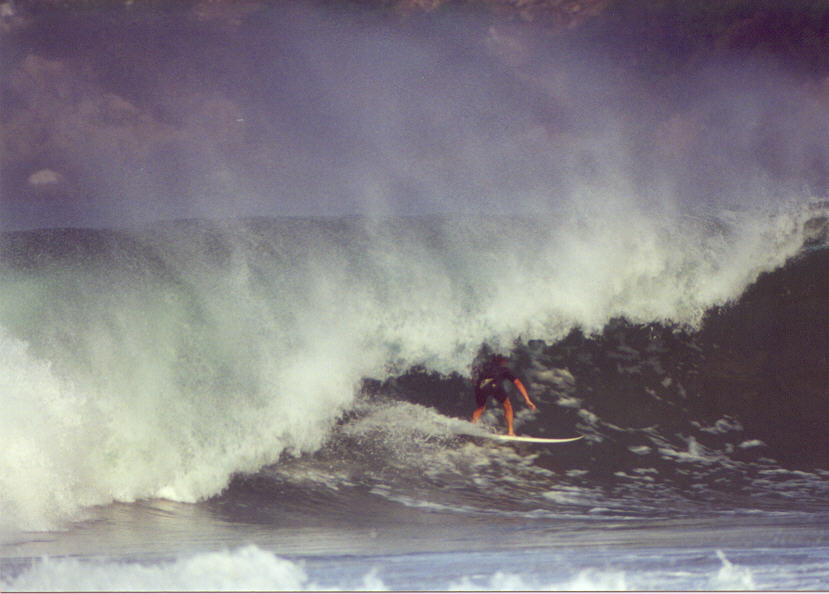
Eventually, the evening worked its spell and – sun beyond the horizon, water changing colour – the wind dropped back. The waves got better as the day ran out until, right on the edge of dark, the set came through: shadowy swells filling the bay, the biggest waves of the afternoon. One of the Maori guys who lived up the valley caught the first one, dropping out of the lip to the hoots of his mates. I was next in line, the second one was mine, thick low swell bent into the bay. Humming with nervous excitement – don’t blow it, don’t blow it – I paddled out, spun and starting paddling in, matching the wave’s speed as it steepened, jumping to my feet as it became vertical. With a yell I called an interloper off and dropped, board falling under me. Turning at the bottom, I could see the wall beginning to bend in on itself. After that everything was instinct. I held my turn back for a moment, then angled up the wave, stalling, loosing speed, and then back down again, now pointed for the shoulder, in the pocket, accelerating. The wave turned concave, it’s dark-dark green lip throwing over me, and I was standing in the tube, chattering mind silenced for a moment, weaving my way through, section after section throwing over me.

Just before the closeout the wave backed off, letting me out and leaving me time to straighten out in front of the whitewater. Laughing, singing to myself; happy, happy at the end of the day.

April 10, 2009

Wipeout!

Filed under: Going Places, Surfing — terence @ 9:10 am
Tags: , ,

On You Tube – the Verizon Wireless big wave wipeout awards. For what it’s worth, Ross Clark Jones gets my vote.

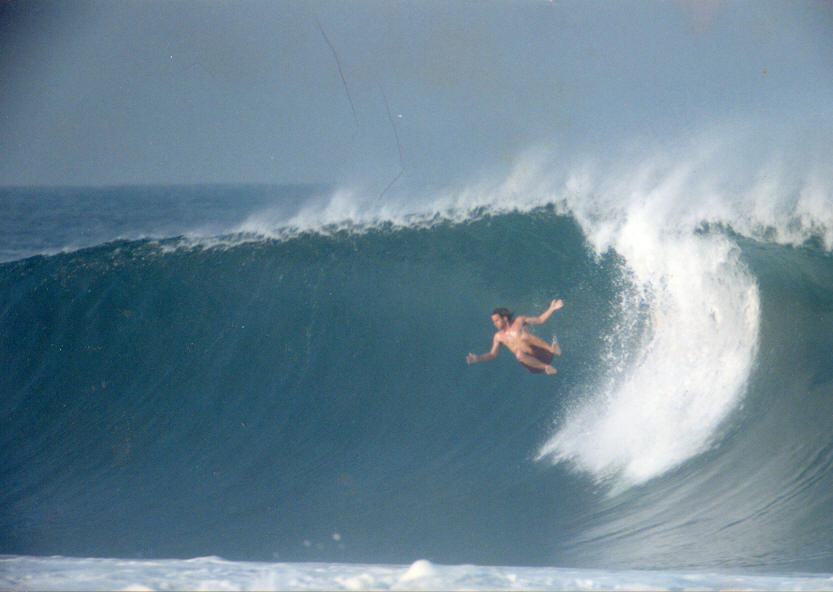
Funnily enough, the worst wipeout I ever saw didn’t involve a surfer at all. I was travelling north through Latin America and had stopped for a week in Puerto Escondido. The last two days the swell got huge – long lines of menace heaving in from the unending Pacific. Grinding top to bottom closeouts exploding sand-saturated water into the sky. Evil rips snaking out to sea.

I quit while I was ahead and, along with everyone else, sat it out in my hammock. Safe on the hill, yet still swallowing adrenaline with each set that thundered in.

On the second afternoon, cooled by a gentle sea breeze, I was sitting watching, scaring myself with thoughts of actually going for a surf, when I saw the Pelicans. Just beyond the breaking waves, two of them, feeding on a school of fish.

Pelicans are actually amazing surfers. You’d see them in the morning at Puerto, riding the offshore breeze, skimming along the tops of the steepening swells, sailing to safety on the updrafts above the breaking waves.  But these two were concentrating on the fish – caught up in a feeding frenzy. And, as any big wave surfer can tell you, when the surf’s huge it really pays to keep your eyes fixed out to sea. They’d been feeding for maybe 15 minutes slowly following the fish in, when a giant set groaned in out of the green and blue. Tripping on the shallower sand, the waves stood up like apartment blocks. And the Pelicans figured it all out too late. Desperately flapping, clumsy in take off, trying to get above the rising swells. The first bird made it, just squeaking over the top of the biggest wave. The second one didn’t stand a chance. By the time it was flying properly, the wave – at least five times overhead for a human, impossibly huge for a bird – was on top of it, a giant, barreling righthander.

It was hopeless but, in do or die-mode, the bird did everything right. Rather than try and fly over the beyond vertical breaking wave, it banked off the wall and sped south, heading for the shoulder and a chance of escape. It’s exactly what any surfer would have done. And for a moment I thought it might win the race, gathering speed in the mouth of a cave-like barrel, desperately aiming for unbroken water.

But it wasn’t to be. Not quite fast enough, it got winged by the upwash of the exploding lip and in an instant was gone, engulfed in detonating water. Unaware, the wave steamed on in but I was on my feet now, shouting at the wind.

Caught right in the heaviest part of a huge set wave, on a maxed out day at one of the world’s most dangerous surf spots, the bird had to be dead. Ripped wing from wing, I figured. Sitting back down, I stared out over the stella white sweep of foam that followed in the set’s wake, looking for a body. Nearly a minute went by. Then, all of a sudden, there it was! Way on the inside, near the beach, flopping around in the water. Alive, but broken surely. It tried to take off, but got hit by a whitewater, and washed further in. And then, in a gap between waves, the impossible happened. It steadied itself, flapped its wings, built up speed, got gliding, made it over the next whitewater, and soared to safety out to sea.

Up on the hillside, the witness to all this, I stood back up out of the hammock and started to clap and cheer.

April 7, 2009

Obligatory Wednesday Post

Filed under: Ramblings and Musings — terence @ 7:24 pm
Next Page »

Blog at WordPress.com.